Harvard Historical Society
Discover Your Town
Shaker Documentary
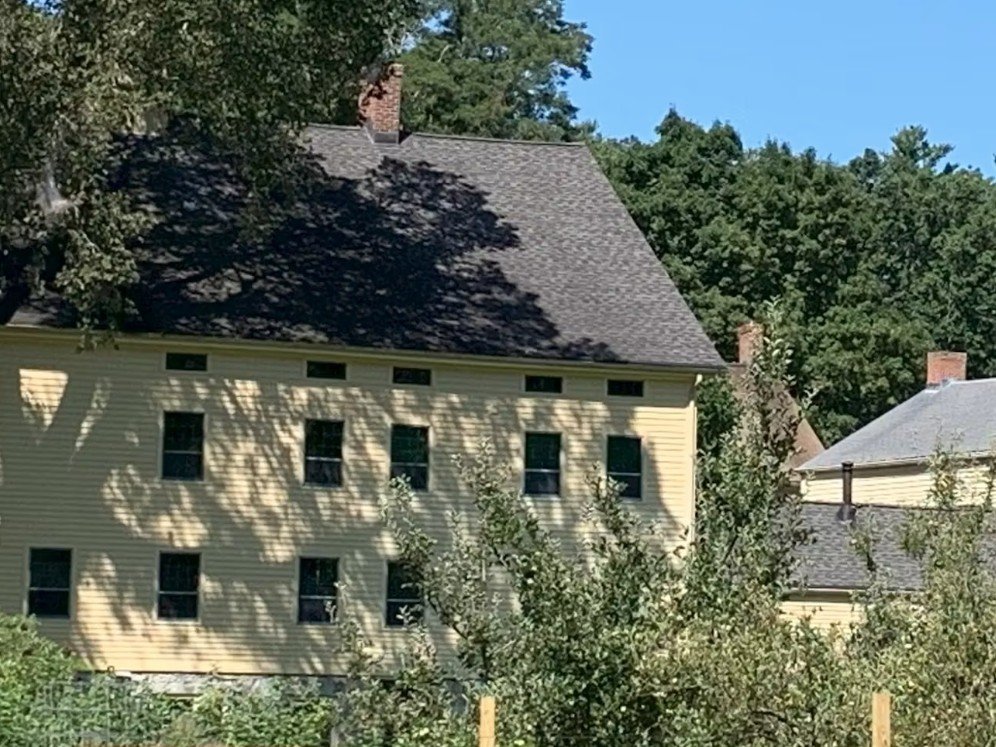
Discover the enduring legacy of the Shakers, whose philosophy on furniture and community was remarkably ahead of its time
Discover the enduring legacy of the Shakers, whose philosophy on furniture and community was remarkably ahead of its time
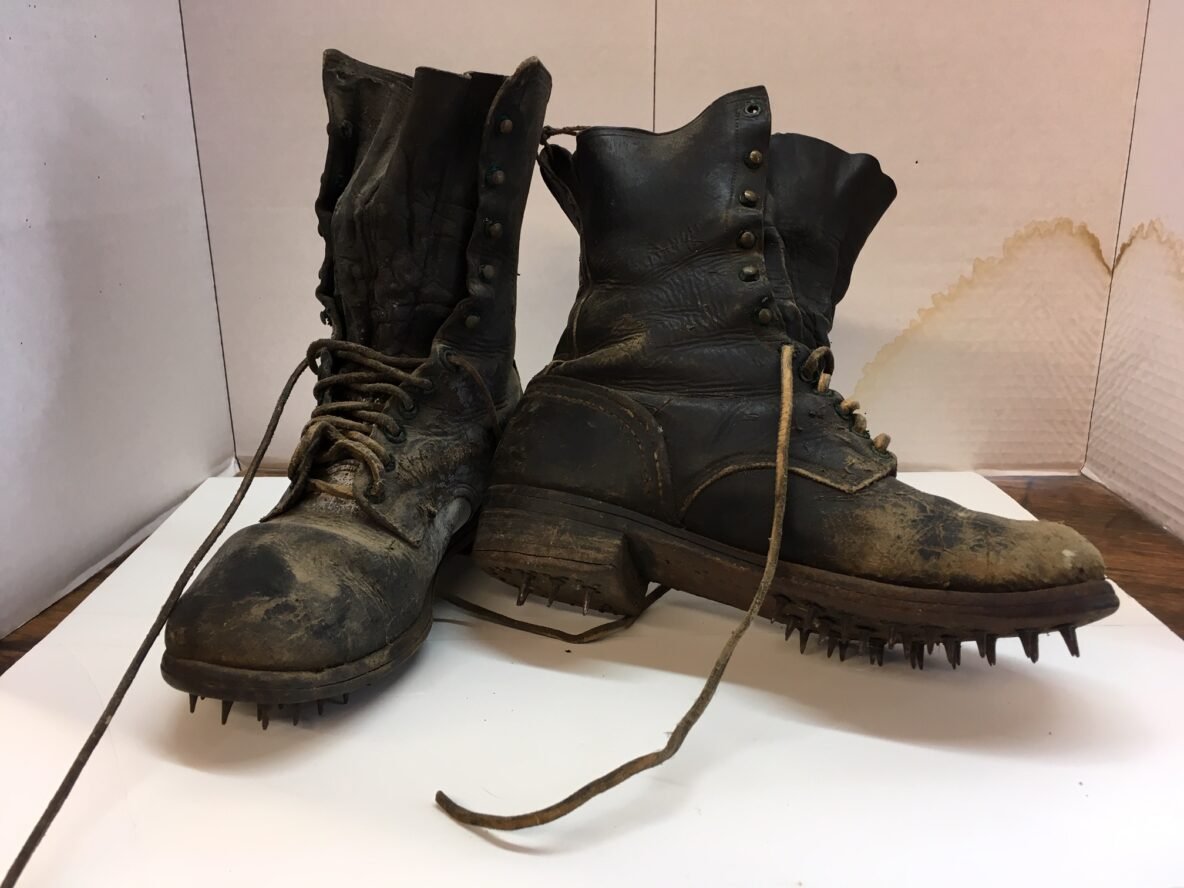
Severe cold and clear freshwater ponds produced hard, compact, valuable ice for an expanding industry.
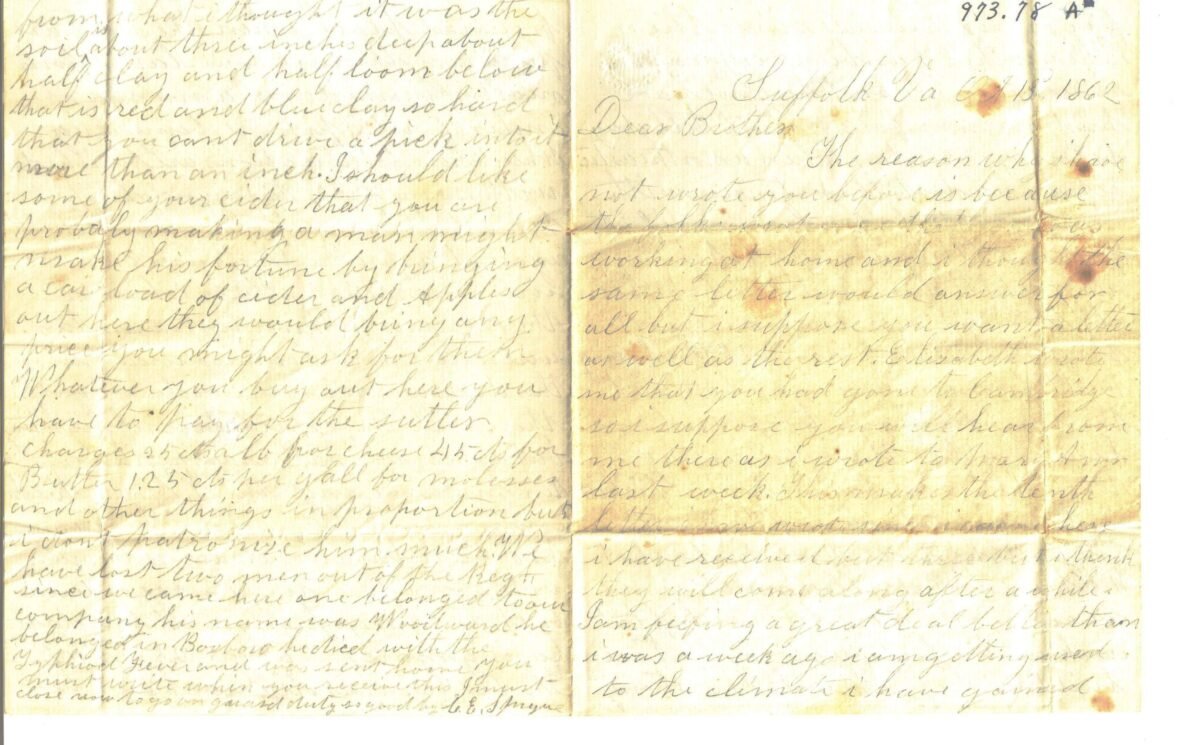
Dear Brother, The reason why i have not wrote you before is because the folks wrote that you was working at home and i thought the same letter would answer for all but i suppose you want a letter as well as the rest…
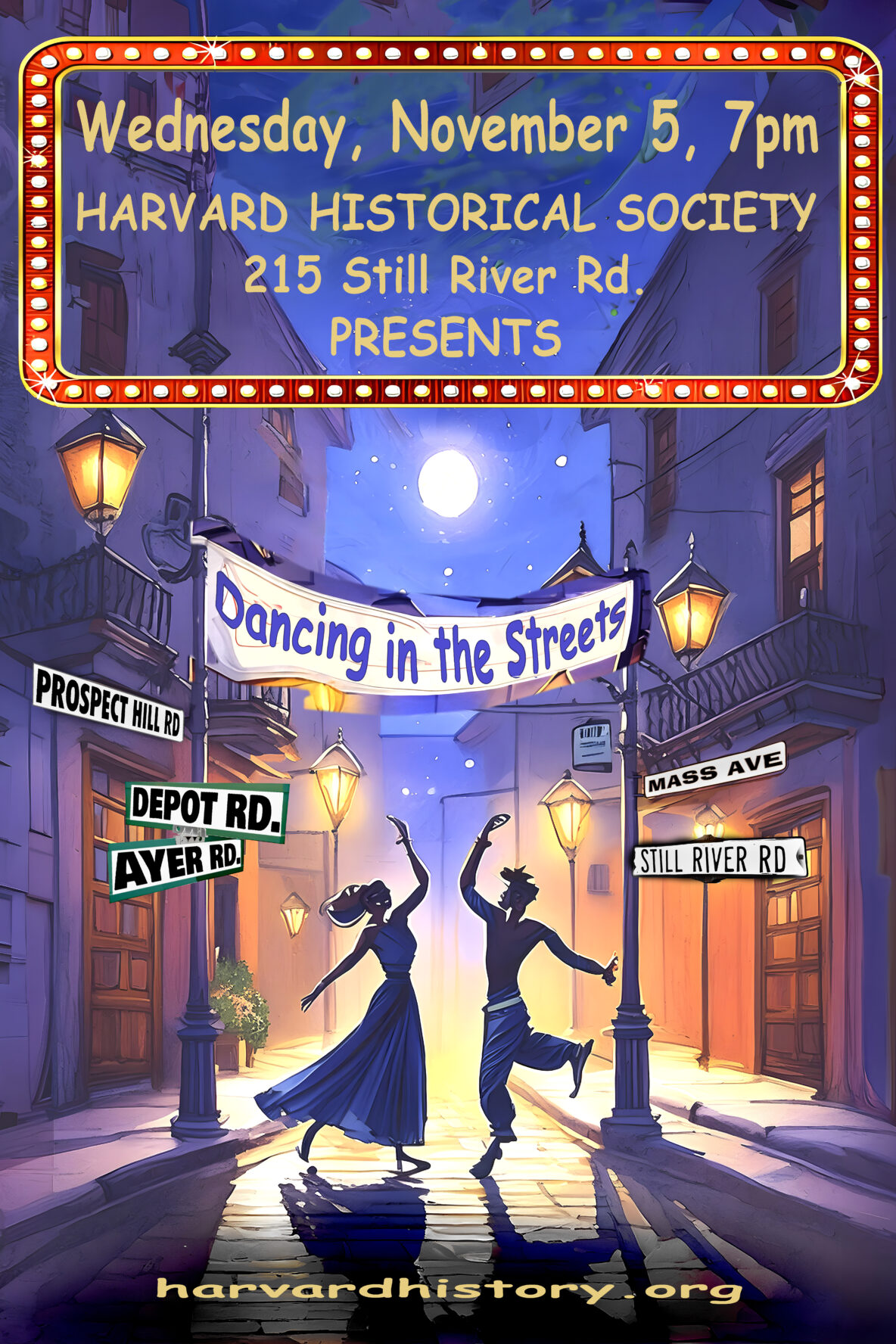
Enjoy a fun evening of live music, original historic art and period dance, while mistress of ceremony Clara Endicott Sears shares Harvard’s history of the arts.
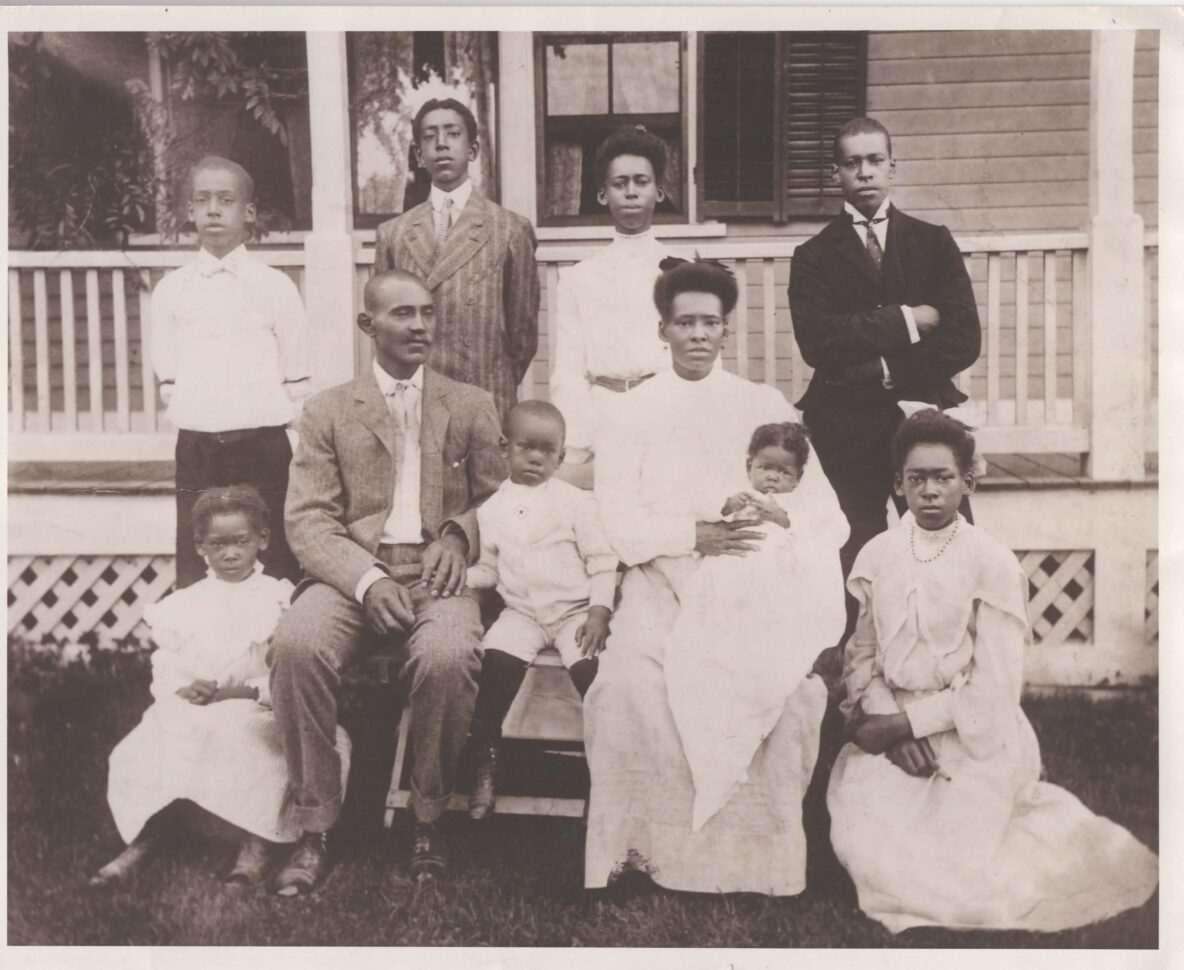
Joan Blue, a board member of the Harvard Historical Society, tells the history of her family and the town together.
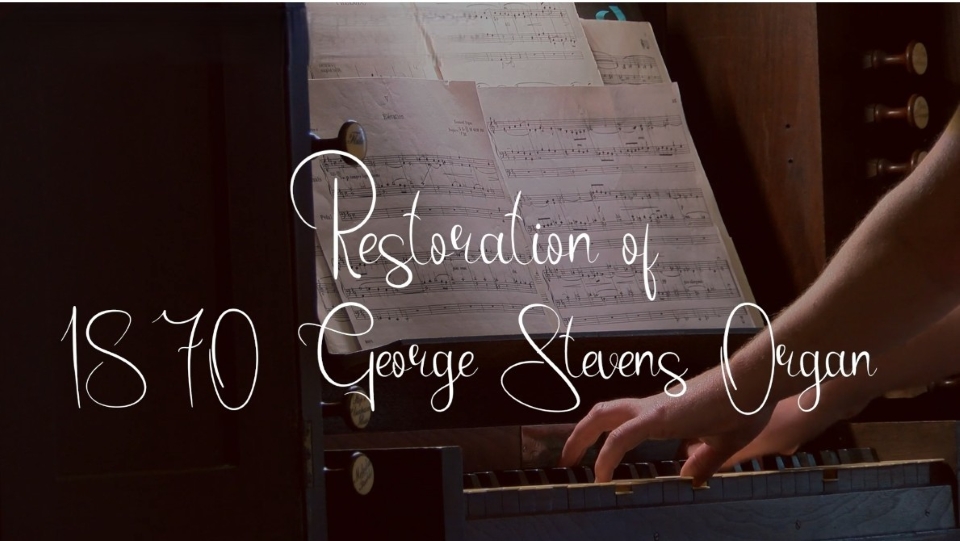
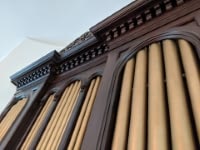
Presentation by Johnathan Ross and Ryan Bartosiewicz of the restoration of the 1870 George Stevens Organ done by the Andover Organ Company.
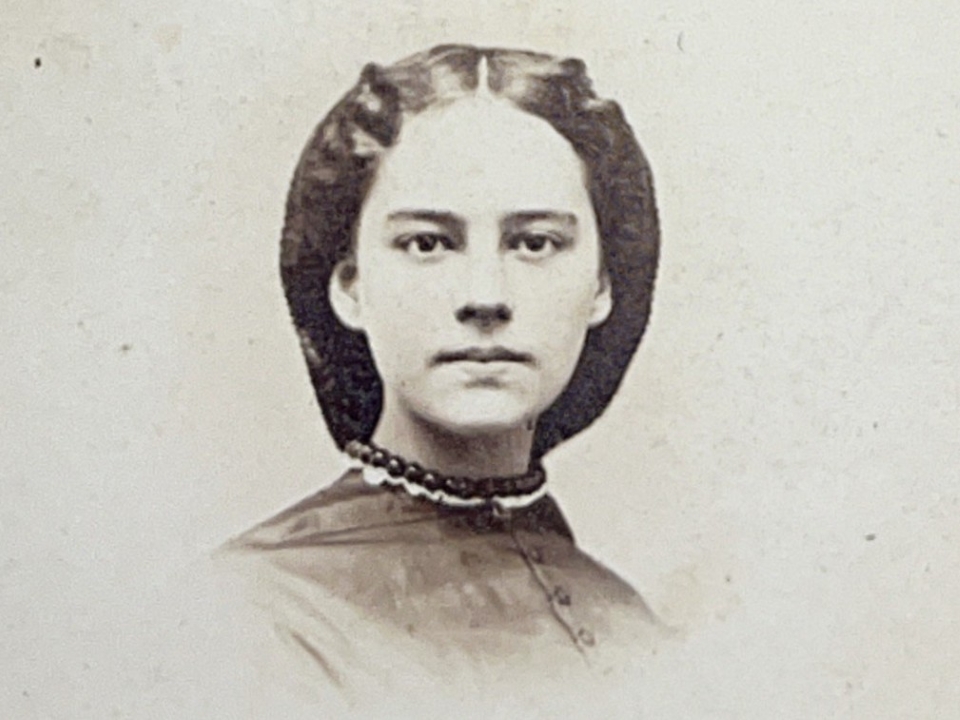
Discover a unique view of Civil War history through the eyes of Fanny and Charles Whitney who lived in Harvard.
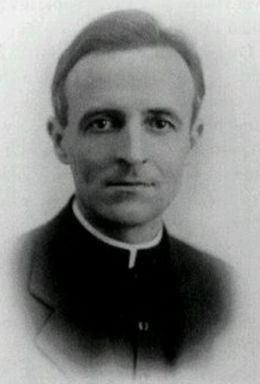
An important yet controversial character in American Catholicism
A Jesuit priest who brought a group of followers to Harvard
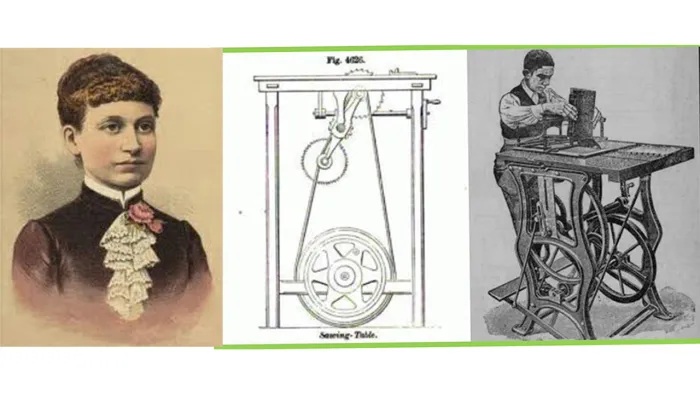
Babbitt’s, a tool maker and inventor, was a member of the Harvard Shaker community. Inventions attributed to her include the circular saw.

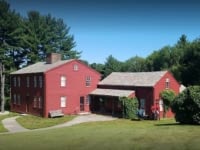
In the early 1970s the town chose to preserve our town history by designating the Village Common and the Shaker Village area as historic districts, a legal mandate to preserve our historic assets.

“…saturnalia at the taverns on Harvard Common were gross, but they were cheap and open to public scrutiny. Men of all sorts and conditions resorted there every day and evening to guzzle until stupid or half-crazed. There are traditions of more vicious, secret, and costly orgies at which Harvard citizens figured in the old brick taverns of North Lancaster.”- Henry Nourse in “History of Harvard, Mass. 1732-1893”
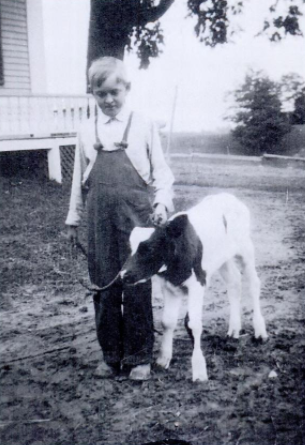
“My first dinner at the Shaker Community was at noon that Friday. That was a traumatic meal for me. I had been brought up in the Catholic Church at a time when it did not accept eating meat on a Friday.”
Sister Frances A. Carr, “Growing Up Shaker”

A Living History Cemetery Tour highlights Harvard soldiers in the Revolution. After an overview showing Harvard’s growing resistance to the British, hear six Harvard soldiers tell their stories of patriotism, unity, and endurance.
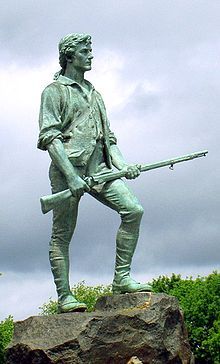
Discover the muskets and rifles that were used during the American Revolution by the British and the Colonists. An illustrated talk by Ed Sterling and Keith Hatfield.

The old millstone on the Common was first dedicated in 1948 as a “town marker” honoring the founders of the town.
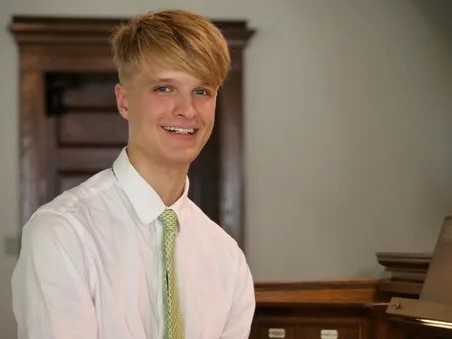
Gavin Klein was artist-in-residence at the Harvard Historical Society from 2020 to 2022, keeping the newly restored 1870 Stevens organ in tune and in use.
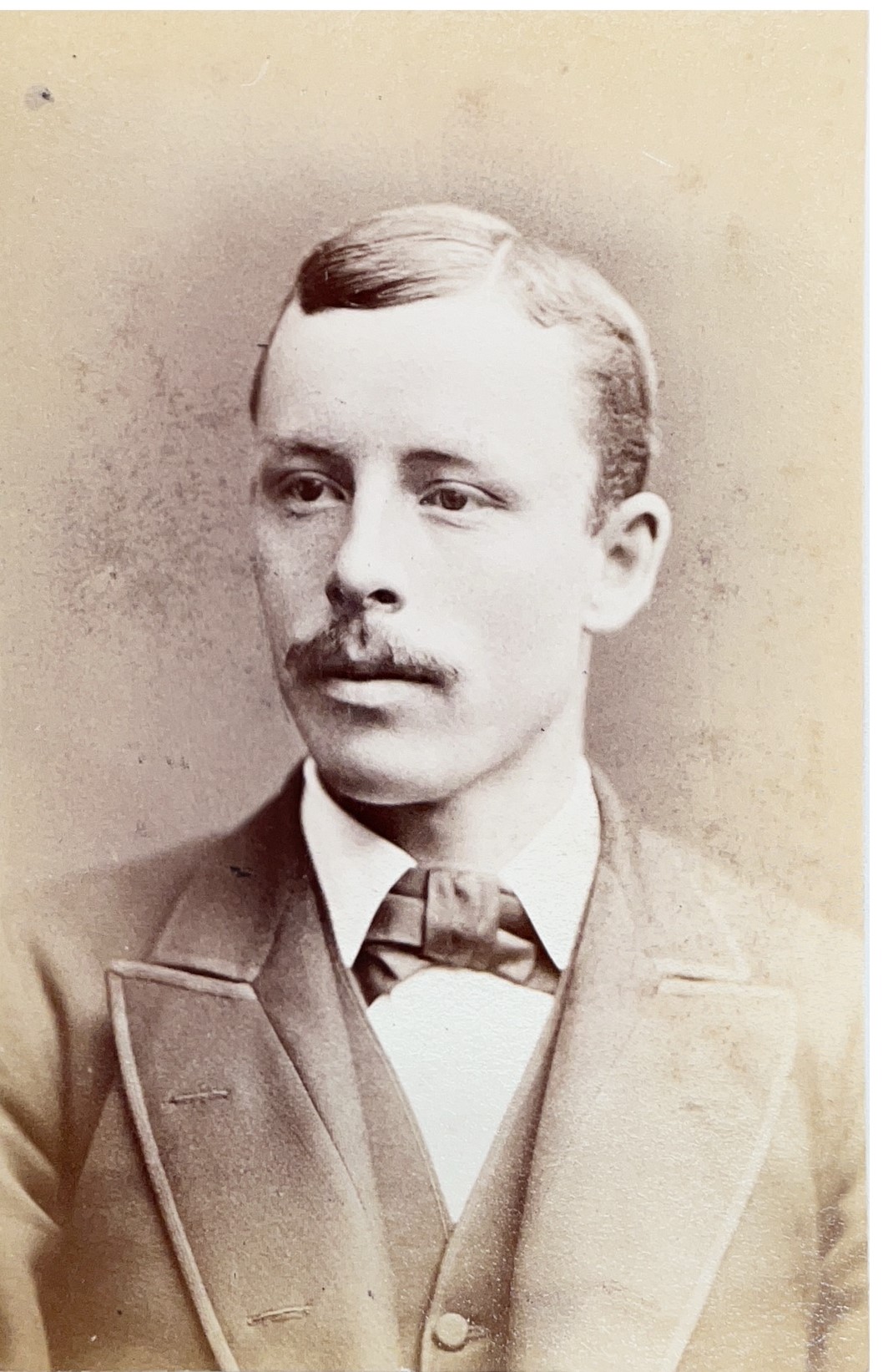
Samuel H. Houghton invented and manufactured his “Safety Egg Carriers” next to his home on Harvard Common and Littleton Road. The building has had several uses, including the Red Cross Tea Room, a butcher shop, and an antiques shop.
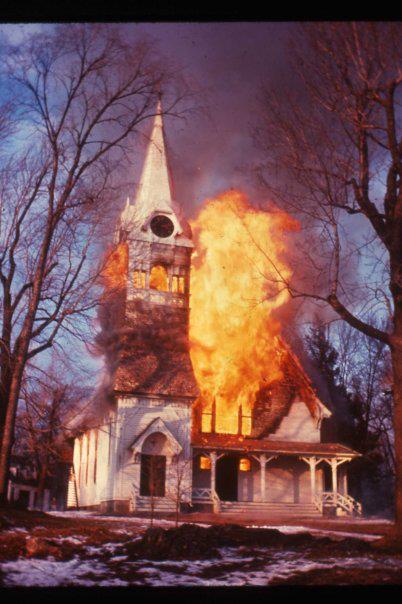
Once again, the church at the top of the Common was ablaze. Firefighters tried valiantly to save the building. Fires have shaped the town’s beautiful center.
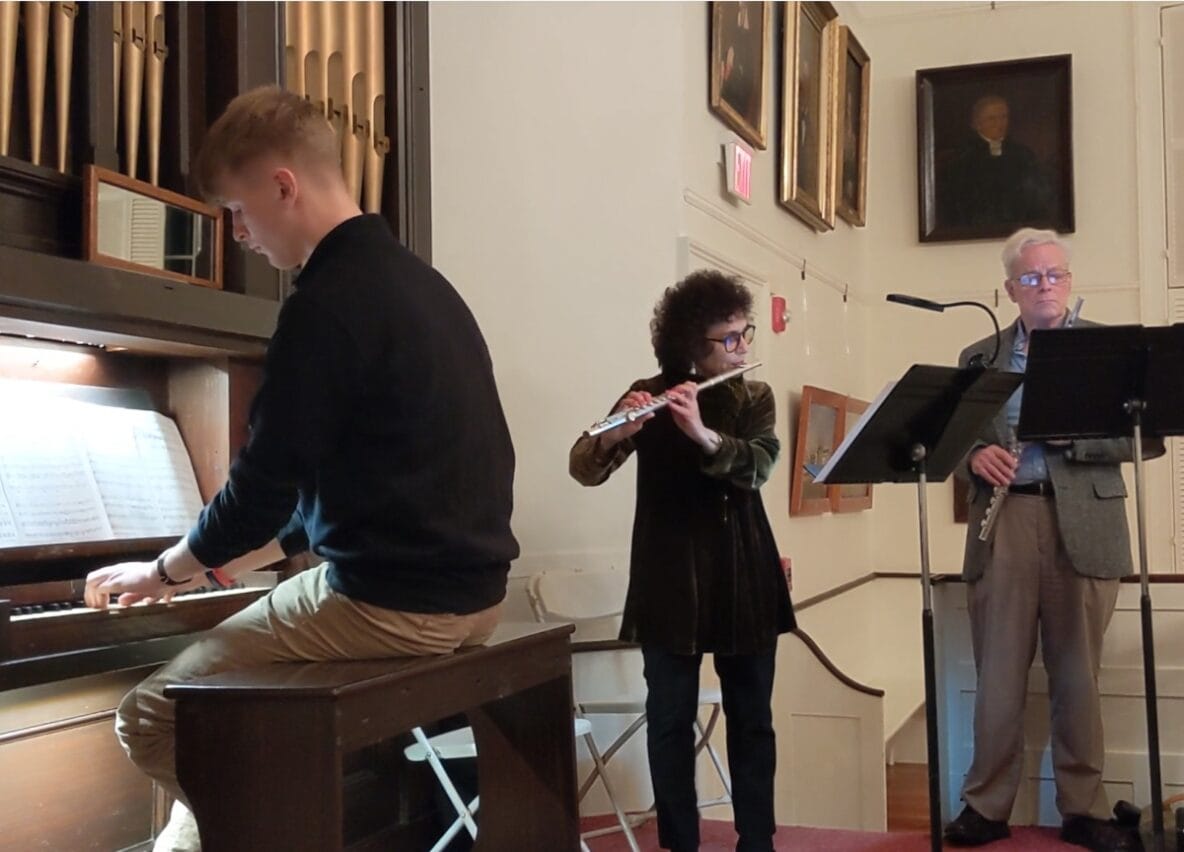
On Tuesday evening December 17, 2024, a Holiday Organ Concert follows our Annual Meeting. 7:00 for Annual Meeting, 7:30 for Concert.

The Harvard Historical Society celebrates a presidential election year with a musical program that’s all about presidents and nothing about politics.
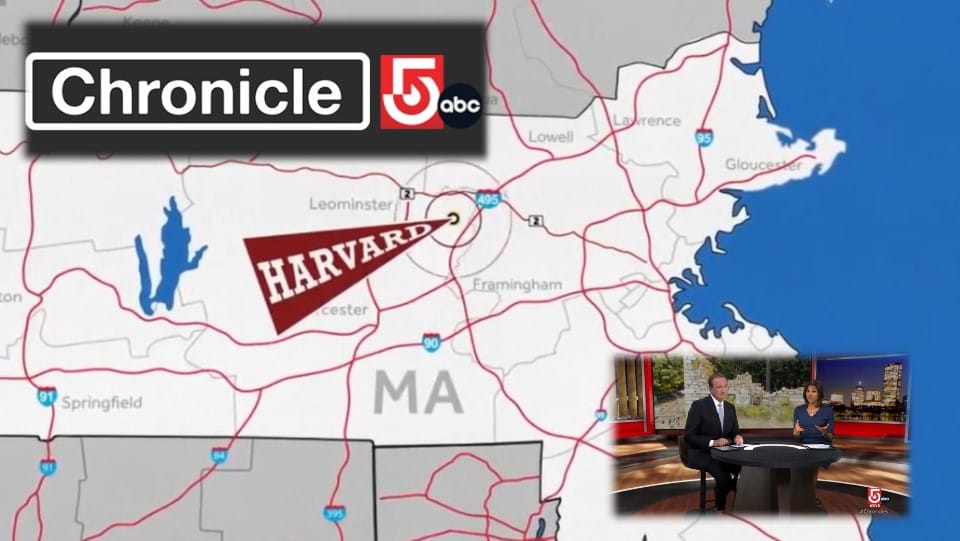
A team from Chronicle visited Harvard for a segment on Massachusetts towns that have names of colleges but no actual college located in them.
How water power and the spirit of improvement inspired inventors in Harvard. The Hildreth brothers Stanley and Edwin were the most well known of Harvard’s ingenious inventors.
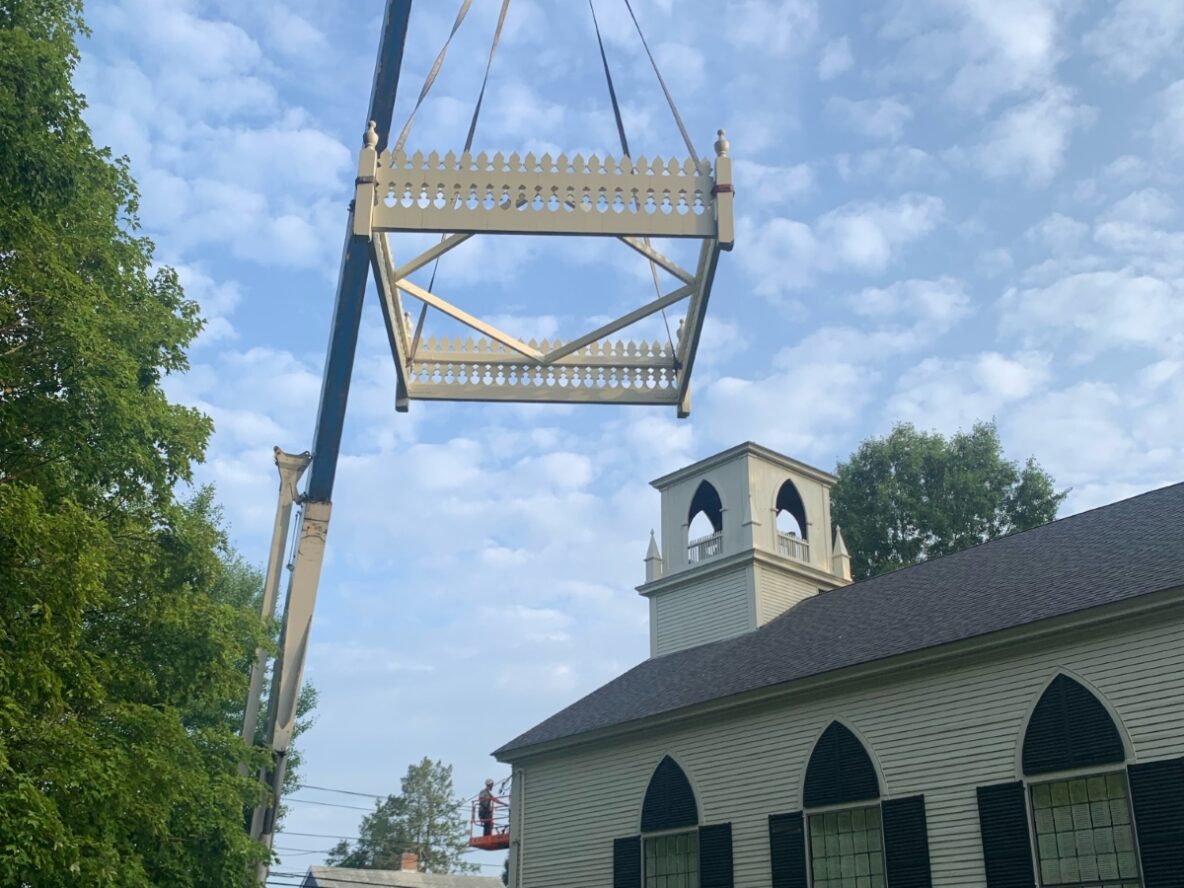
On Monday, August 26, the Harvard Historical Society celebrated the successful completion of a major restoration project with the installation of a newly reconstructed balustrade atop the belfry of the 1832 Baptist Church in Still River.

In the summer of 1939 the Garden Club of Harvard organized a special ragweed eradication campaign. It was carried out by a group of school children under the leadership of Mrs. Frank Cummings…
Event registration post. Used when clicking on “Register” button on an Event post.
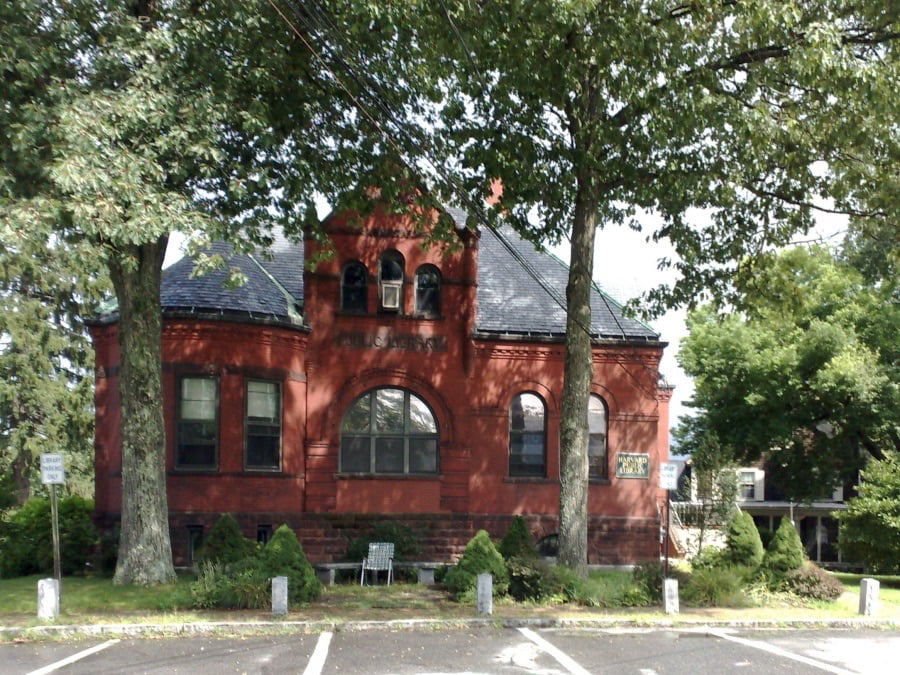
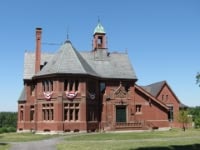
The Harvard Public library had its first permanent home in the building on the Common, 1886
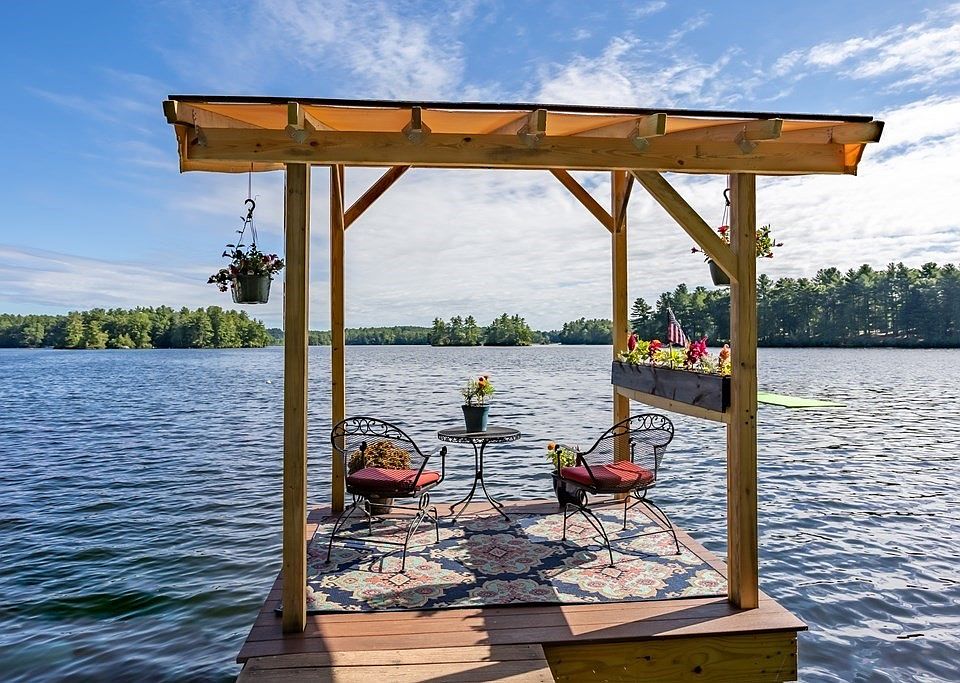
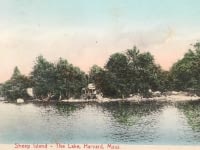
A community on the shores of Bare Hill Pond has flourished since the early 20th Century: A program of stories and history told by those who lived there
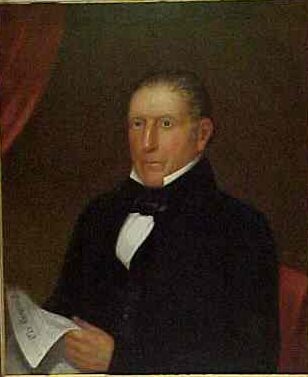
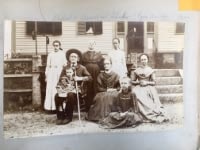
These portraits portray Captain Aaron Whitney, his wife Susannah, and their sons, who lived at 165 Littleton County Road. You can view them in our Meetinghouse.
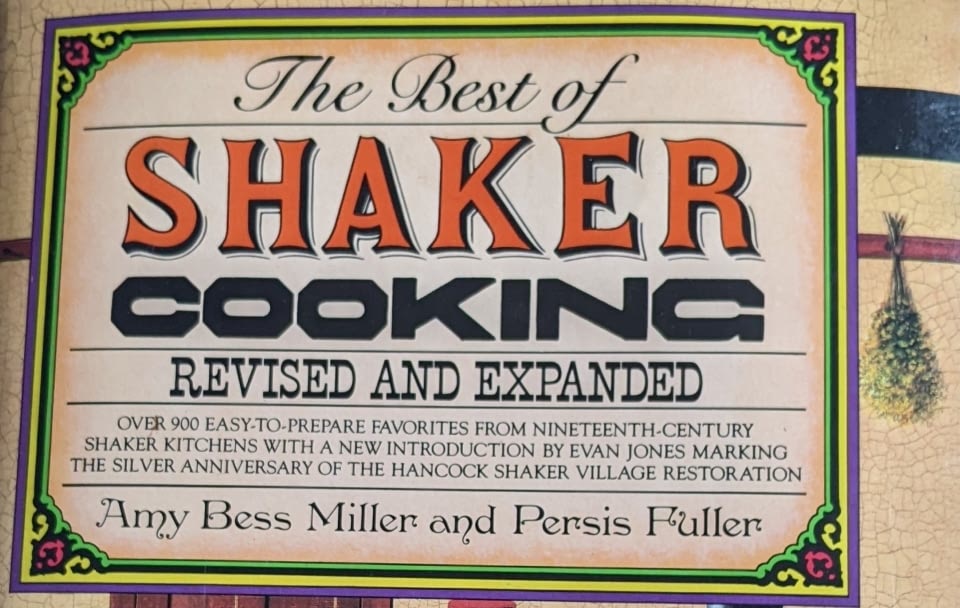
Although the “meatless diet” only lasted ten years (1837 – 1847), it was observed in most communities, but not strictly enforced.
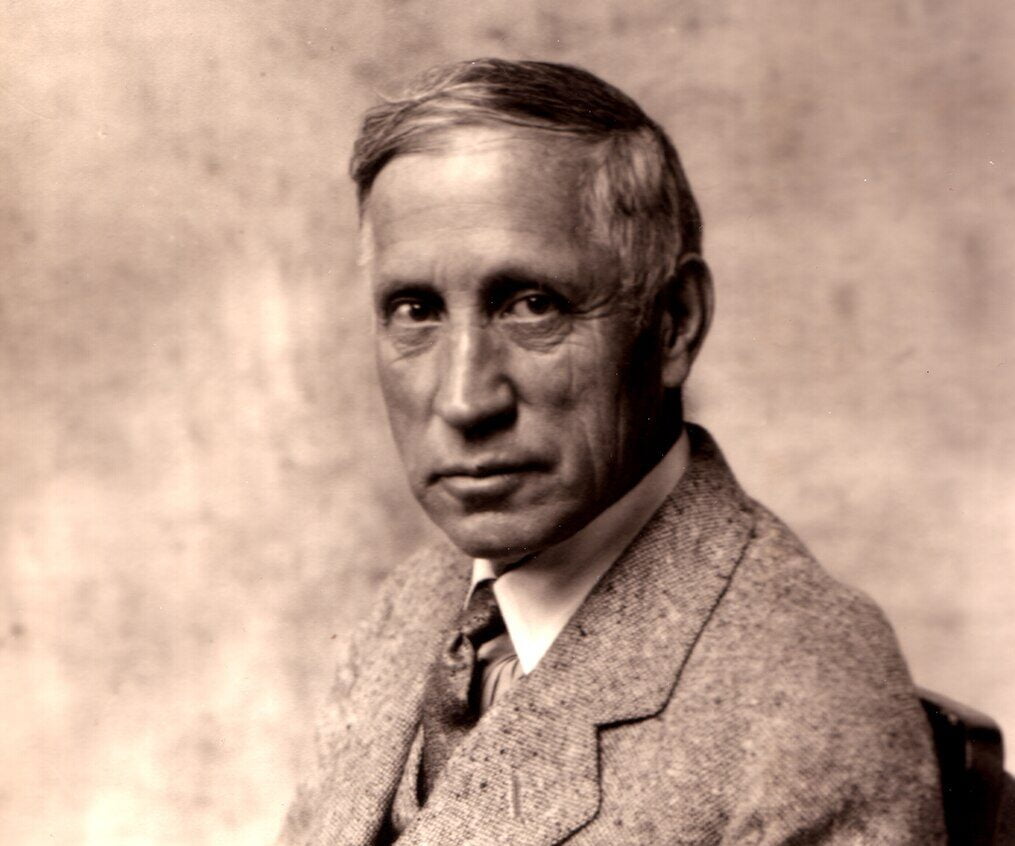
Fiske Warren is most famous as a staunch advocate of Henry George’s single-tax system, a version of which he attempted to create in Harvard named Tahanto.
We are excited to announce the opening of the Harvard Historical Society renewed website! After months of dedicated work, we’ve enriched the online experience to provide you with a more engaging and informative journey through the rich history of the town of Harvard.
This template has all the possible sections in it, including blocks. It is for experts!
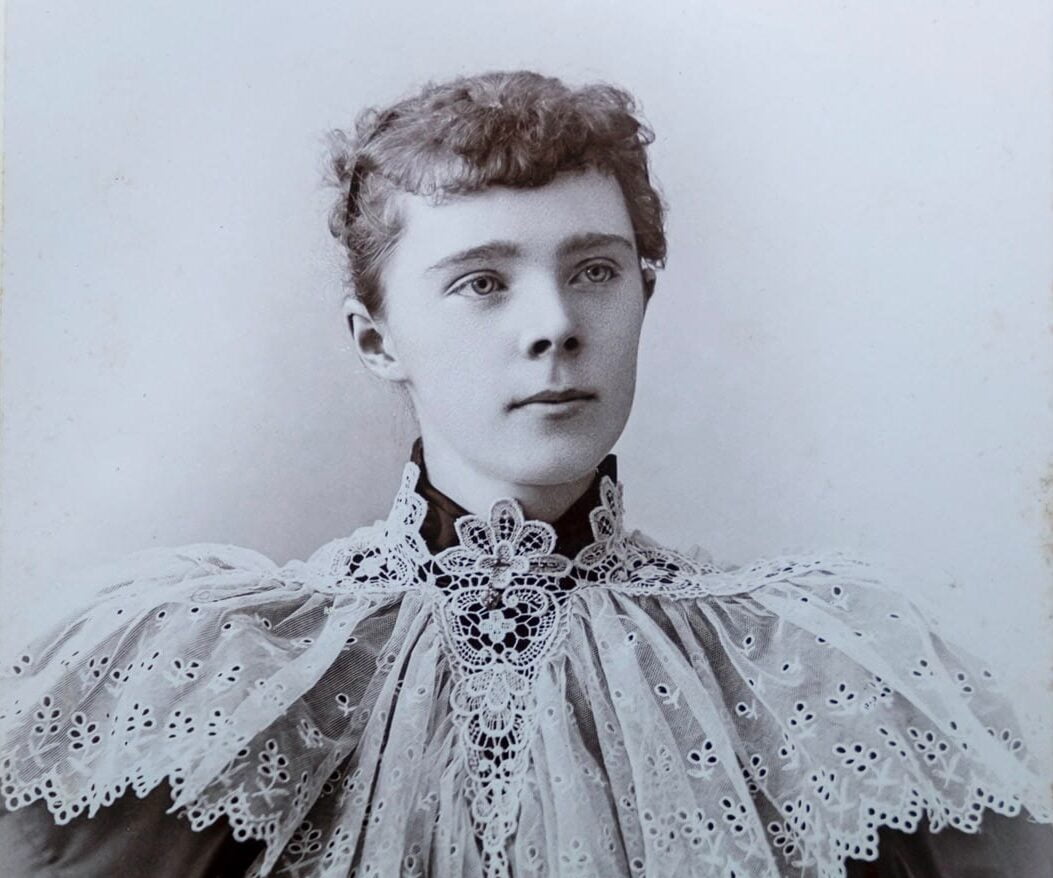
Ida was active in the Harvard Woman’s Club and in the Harvard Historical Society. She chaired a committee to gather material to update the history of Harvard from 1880 to 1940. That manuscript was only recently published.
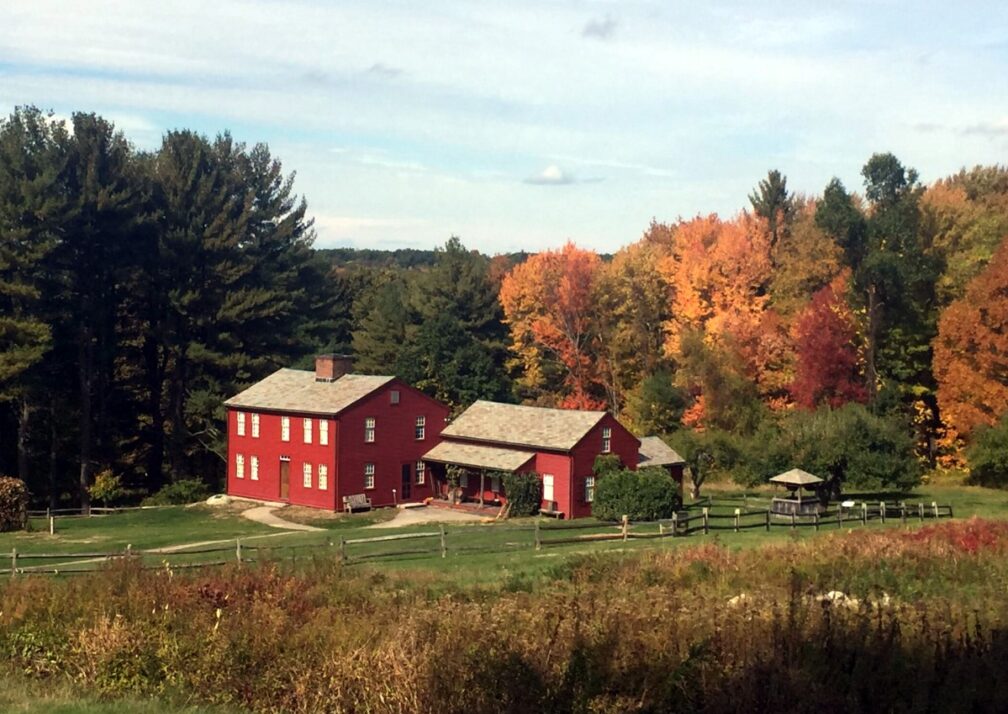
The Fruitlands Museum was founded, expanded, and curated by Clara Endicott Sears, a member of a wealthy Boston family and among the best known and most accomplished of Harvard’s summer residents.
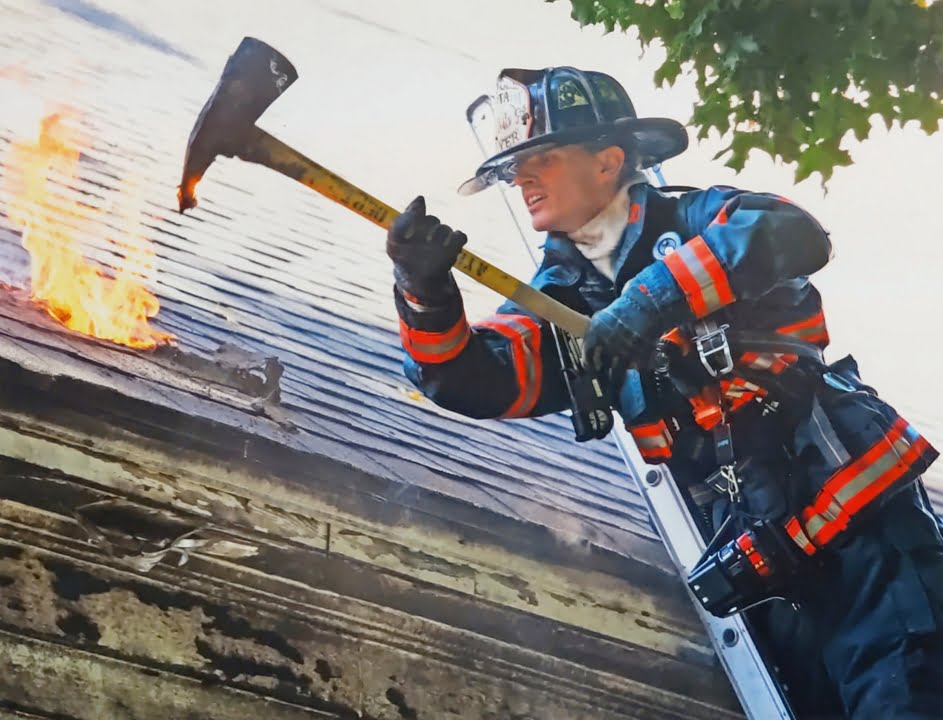
A September 2008 fire was confined to the attic of Sturdy Hall, causing some structural damage but mostly water damage.

Lee McColgan’s house restoration journey expertly examines our relationship to history through the homes we inhabit, beautifully articulating the philosophy of preserving the past for the future.

A retired academic librarian, Ned is a researcher specializing in the history of the Harvard Shaker Village.
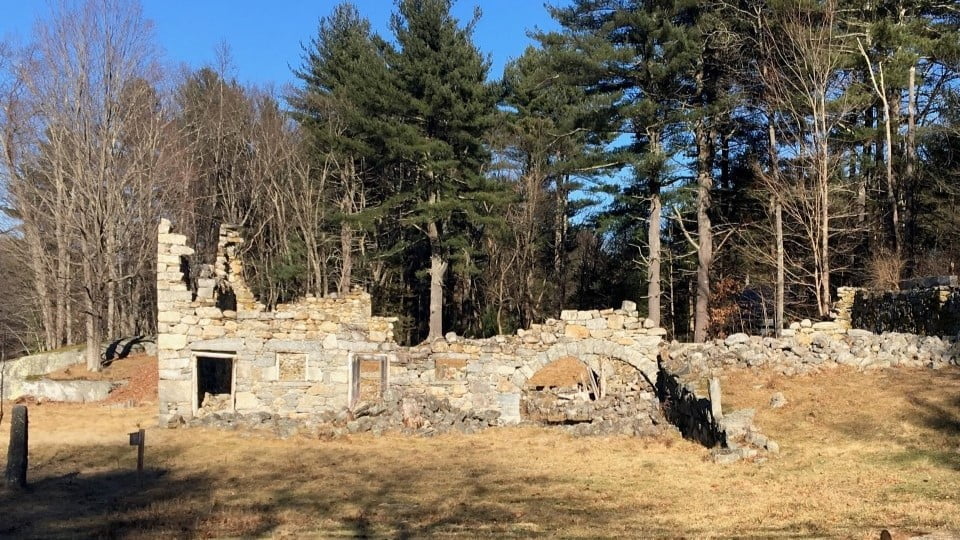
Robert C. Anderson in his “Directions of a Town” wrote: “The first task of the Shakers at Harvard in their growing years was the cultivation and improvement of the tracts of land they had acquired, probably the worst agricultural land in Harvard.”
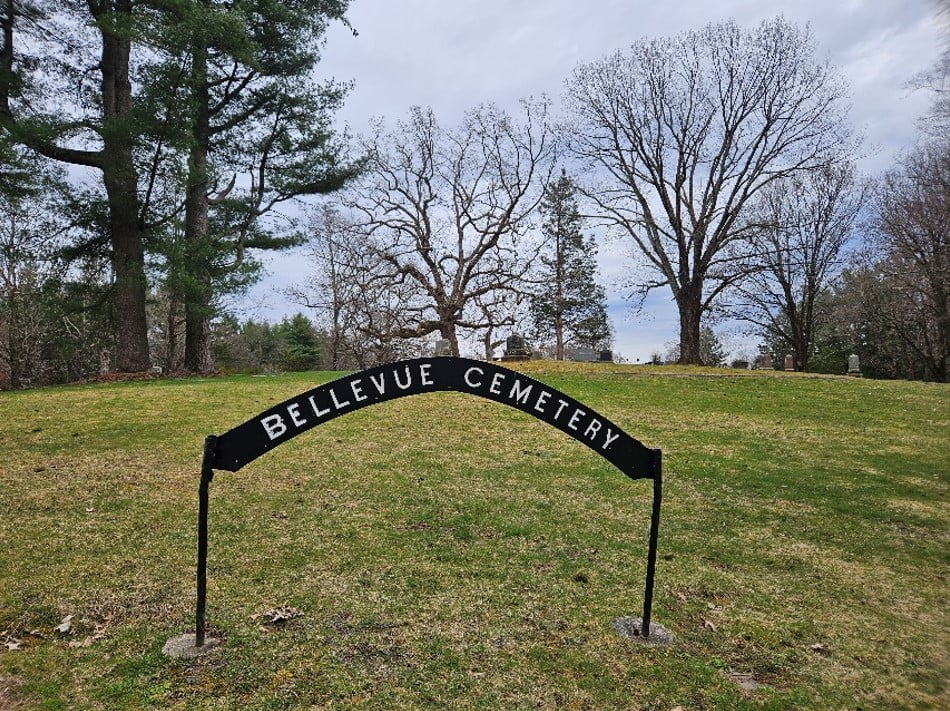
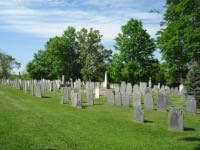
In March 1893 the town approved a new cemetery site; Henry Warner named it Bellevue.
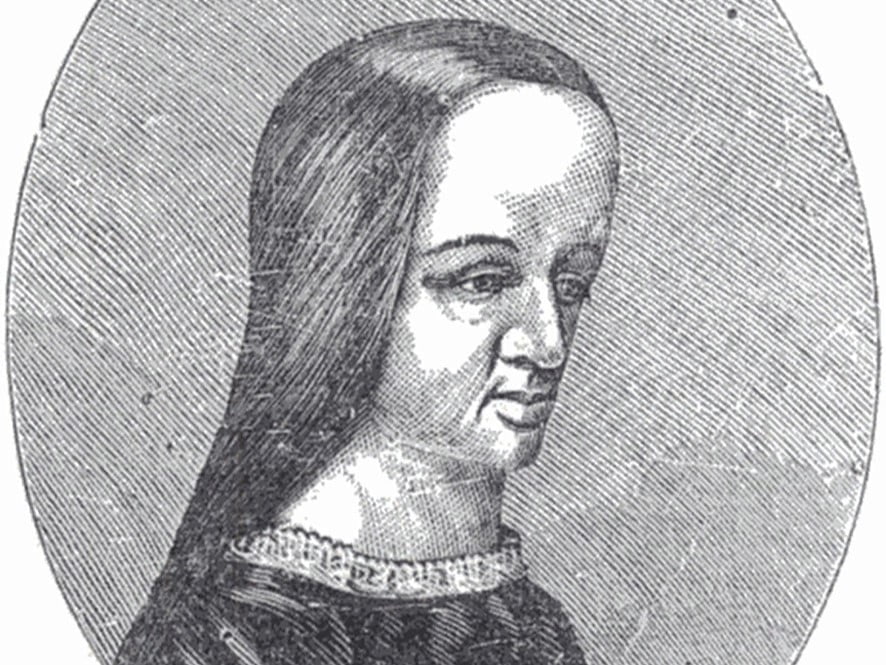
Mother Ann Lee, founder of the Shakers, established a community in Harvard in 1781, the second oldest Shaker settlement in the United States.
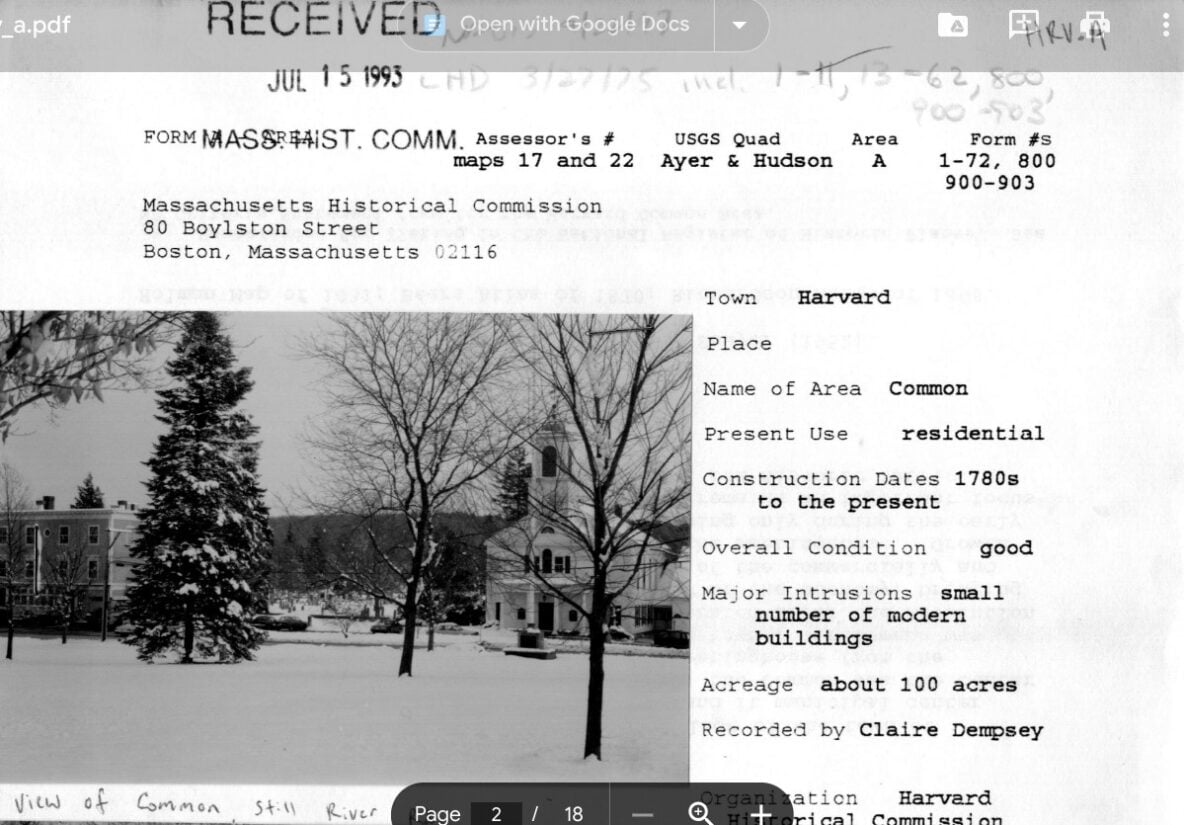
The Harvard Historical Commission’s ‘Local Register of Historic Places‘ includes a detailed architectural description and the history of the property, the buildings and its owners.
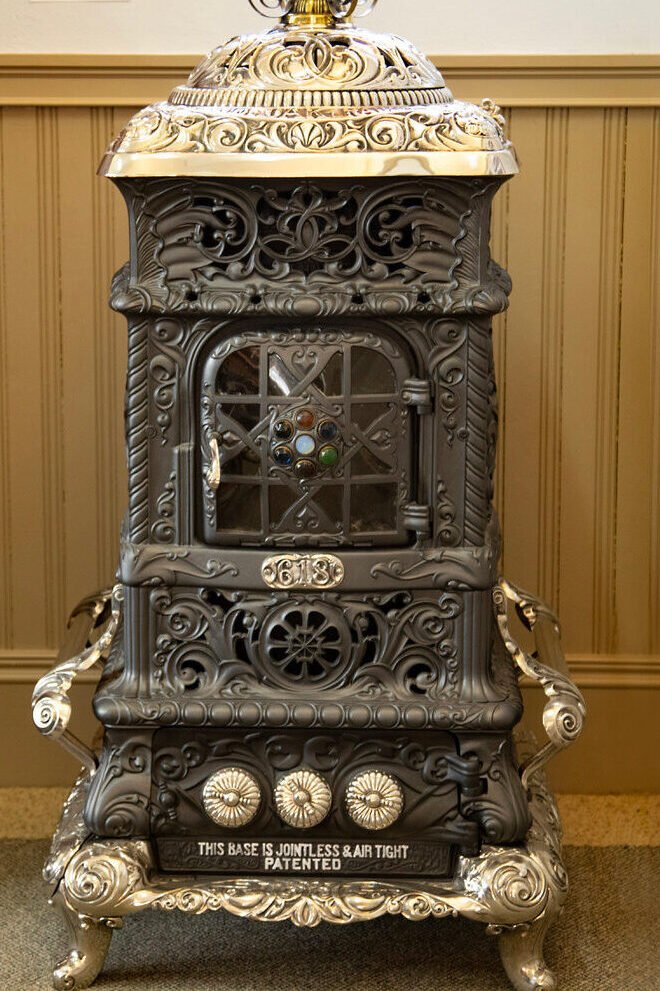
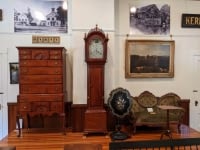
The Historical Society’s purchase of an 1894 parlor stove assures its rightful home in Harvard.
For the Shakers, salt water fish was not considered a luxury as it often is today.